 Coin Price India
A TUFT price claim does not establish that a Treasure NFT account balance can be withdrawn or sold. Before assigning value, verify the exact token, the conversion terms and an independent market capable of buying your quantity. An allocation screen alone cannot answer those questions.
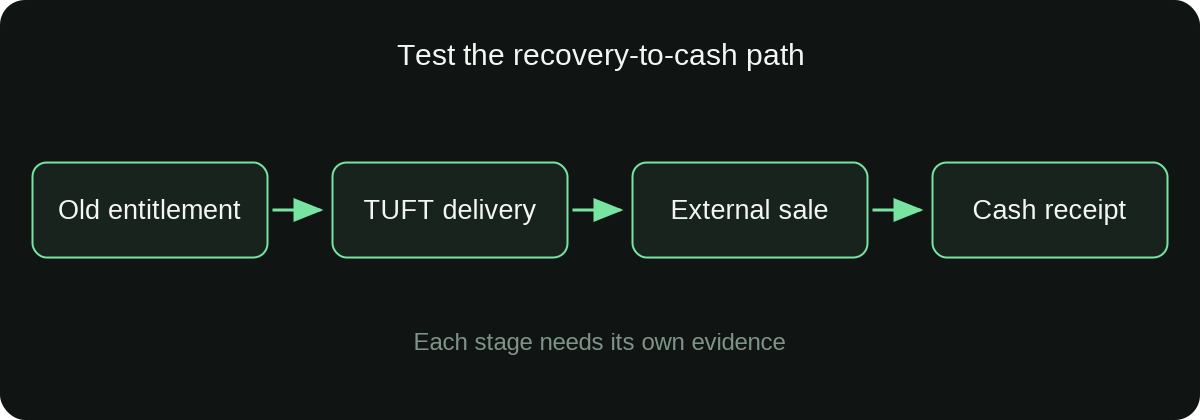
Begin with the claim being made about your money
Someone researching TUFT may be evaluating a new token purchase or trying to recover an older platform balance. Those are different decisions. For an existing claimant, the central question is whether the proposed arrangement improves their actual recoverable position.
Write the proposal in plain terms: what you already hold, what you are being offered, what rights you would give up and whether another payment is requested. Preserve the original account statement before accepting a replacement description.
A conversion offer can replace one uncertain entitlement with another. The new token count may look substantial while leaving transferability, market access or withdrawal conditions unresolved. Do not let a quoted unit price conceal those missing steps.
What the published material can and cannot establish
Third-party crypto articles have discussed TUFT and Treasure NFT using launch prices, market rates and recovery narratives. For example, Bitrue has published a TUFT rate article and a Treasure NFT overview. These are publisher pages, not proof that a particular user can complete a withdrawal today.
A quoted figure needs its original date, venue, asset identifier and methodology. A rate described as an initial value must not be republished as a live executable bid. Nor does hosting an article establish that the publisher's exchange operates the stated market.
An Indian parliamentary answer concerning online investment fraud provides official reporting context. Such material should be read within its wording and date; a reference to complaints or concerns is not a substitute for a final judicial finding about every operator or transaction.
Use a recovery-to-cash waterfall
A useful valuation follows the entire chain rather than stopping at the largest displayed balance. There must first be a defined entitlement, then an identifiable asset, then delivery, then a supported market and finally settlement into funds you control.
| Stage | Question to resolve | Evidence stronger than a promotional screenshot |
|---|---|---|
| Conversion | What does the old balance become? | Written terms and account reconciliation |
| Delivery | Can the asset leave the platform? | A relevant-chain transaction |
| Sale | Who buys the intended quantity? | Accessible depth and completed orders |
| Settlement | What amount reaches your control? | Settlement and bank records where applicable |
Failure at any stage prevents the later number from becoming a reliable cash estimate. This is why multiplying a replacement allocation by a promotional token rate can overstate recovery.
The waterfall is an analytical method, not a claim that any TUFT route currently works. Where the required evidence is unavailable, record the stage as unverified rather than entering a guessed success percentage.
Check whether the market is independent of the promise
A platform may display an internal conversion rate between account units and a token. That rate does not automatically represent outside demand. Determine whether unrelated buyers can trade, whether holders can deposit their units and what restrictions govern sales.
If an external pool is cited, verify its network and exact asset identifiers. A same-name token can exist without any relationship to the account claim. A pool's existence also does not establish adequate liquidity or permission to sell a particular holding.
Look at the quantity relevant to your case. A tiny successful trade does not show that a large allocation can exit at the same average price. A screenshot of trading volume does not reveal the bids available to you now.
Do not send funds merely to test a market that has not passed basic identity and access checks. Research can stop at an unresolved requirement without turning into another speculative deposit.
Treat release fees as a separate financial decision
Requests for activation money, tax clearance, account verification or withdrawal acceleration require independent examination. A demand does not become legitimate because a dashboard shows a large receivable.
Identify the recipient, legal basis and written terms. An instruction to pay an individual's wallet while promising immediate recovery deserves particular scrutiny. Do not provide a recovery phrase or remote computer access as part of an alleged release procedure.
Where you suspect fraud, avoid negotiating through unofficial recovery agents. Preserve messages and payment details. The National Cyber Crime Reporting Portal is an official Indian reporting route; reporting should not be described as a guarantee that funds will be returned.
Preserve the difference between loss evidence and speculation
Keep original payments, account statements, withdrawal requests, support replies and any proposed token conversion. Record dates and identifiers in a chronological file. This evidence can help a bank, investigator or adviser understand the actual transaction history.
Do not overwrite an earlier rupee loss with a later advertised token valuation. Those are different records. Likewise, avoid publishing other users' personal information while trying to demonstrate a platform pattern.
The separate Treasure NFT article covers broader account and complaint questions. Here the narrower task is testing whether a token price can substantiate a recovery amount.
What a responsible price update should say
A useful TUFT update identifies what has been authenticated, what market was observed and which recovery conditions remain unresolved. It should distinguish a project statement, a third-party article and an independently observed transaction.
If the author cannot verify the token or accessible market, the article should say so directly. Repeating a precise-looking number would add confidence without adding evidence. Uncertainty is a substantive finding when a reader is being asked to risk more money.
Frequently asked questions
Should I accept a claim deadline quoted only in a private message?
Preserve the message and request independently verifiable terms. A private countdown is not evidence of an enforceable deadline. Obtain advice before surrendering existing rights to avoid a supposed expiry.
Can another person's wallet receipt prove where their payment came from?
A transaction can establish that assets moved between addresses. It does not by itself establish the economic source of the payment, the recipient's total investment or whether other users can obtain the same outcome.
Is a screenshot enough when submitting a complaint?
It can help, but retain original messages, transaction identifiers, statements and payment receipts as well. Keep unedited copies and a dated chronology so the screenshot can be understood in context.